
The Penn State Low Trellis Hedgerow System of Apple Production
DOI:
https://doi.org/10.71318/apom.1983.37.3.62Abstract
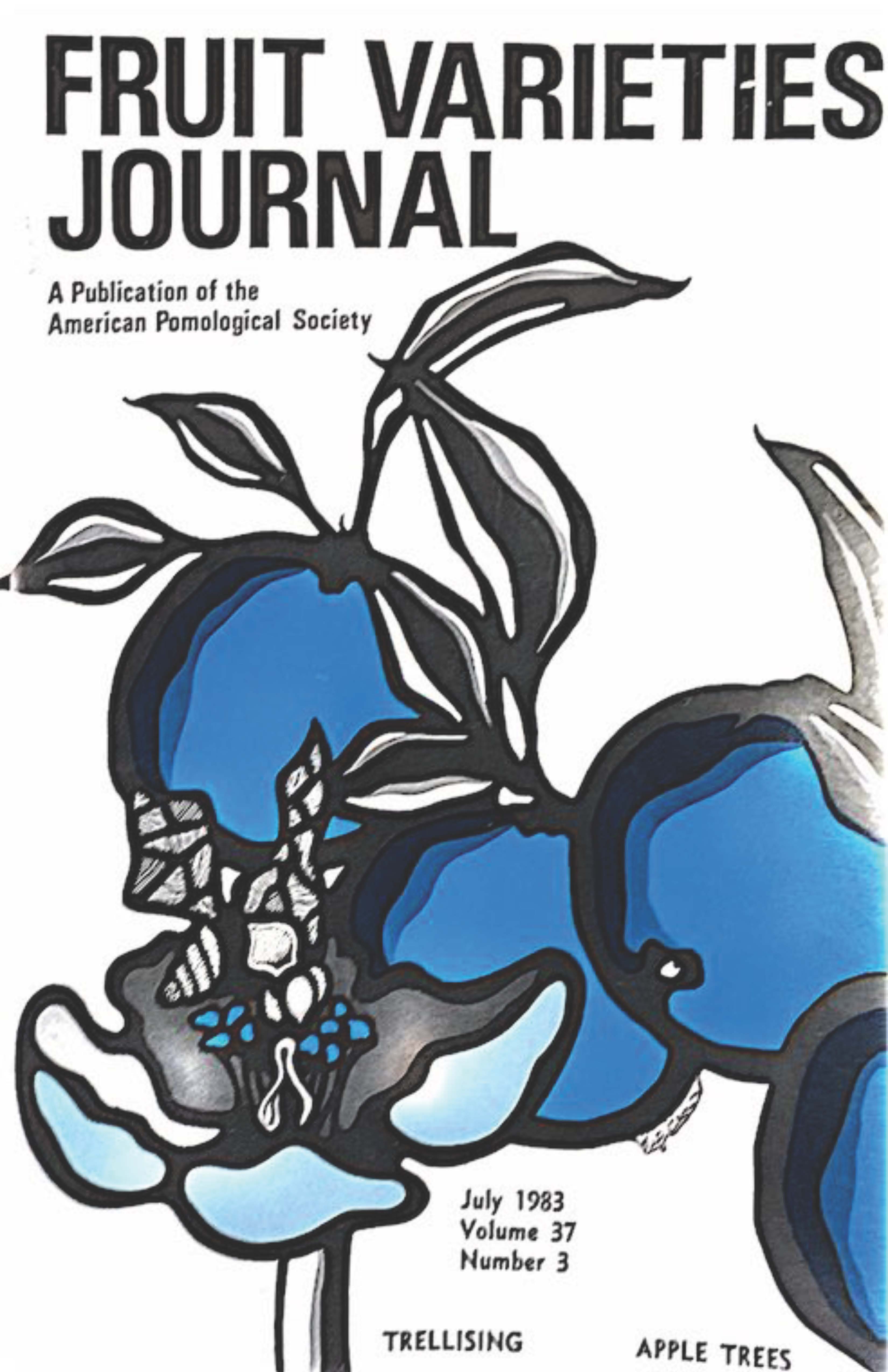
Trellising is a form of espalier where plants are trained as a hedge but supported on posts and wire rather than on a wall. Although originating several hundred years ago, trellising is being used successfully today as a system for commercial apple and pear production in various parts of France and Belgium. Conversely, the potentials of a trellised system for the commercial apple production in the U.S. have been realized only recently. Current feasibility is related to the greater availability of the more dwarfing size-controlling rootstocks, the introduction of growth regulating chemicals, the ability to utilize various training methods more effectively with smaller sized trees, and certain economic advantages of the system. Further, the form of the system has certain potentials for improved mechanization and labor use, especially in relation to mechanical harvesting. Trellising has been under study at the University for over a decade, and has led to the development of the Penn State low trellis hedgerow system for the commercial production of apples. This system is suitable also for the small or amateur fruit grower. To meet current needs and conditions, the art of trellising has been simplified. The philosophy behind this system is the complete control of growth and the regulation of cropping.
Downloads
Published
License

This work is licensed under a Creative Commons Attribution-NonCommercial 4.0 International License.
The American Pomological Society and Editors cannot be held responsible for the views and opinions expressed by individual authors of articles published herein. This also applies to any supplemental materials residing on this website that are linked to these articles. The publication of advertisements does not constitute any endorsement of products by the American Pomological Society or Editors.