Pulp Recovery from North American Pawpaw Fruit [ Asimina Triloba(L.) Dunal]
DOI:
https://doi.org/10.71318/apom.2014.68.2.111Keywords:
pawpaw, fruit, processing, value-added, postharvest, storageAbstract
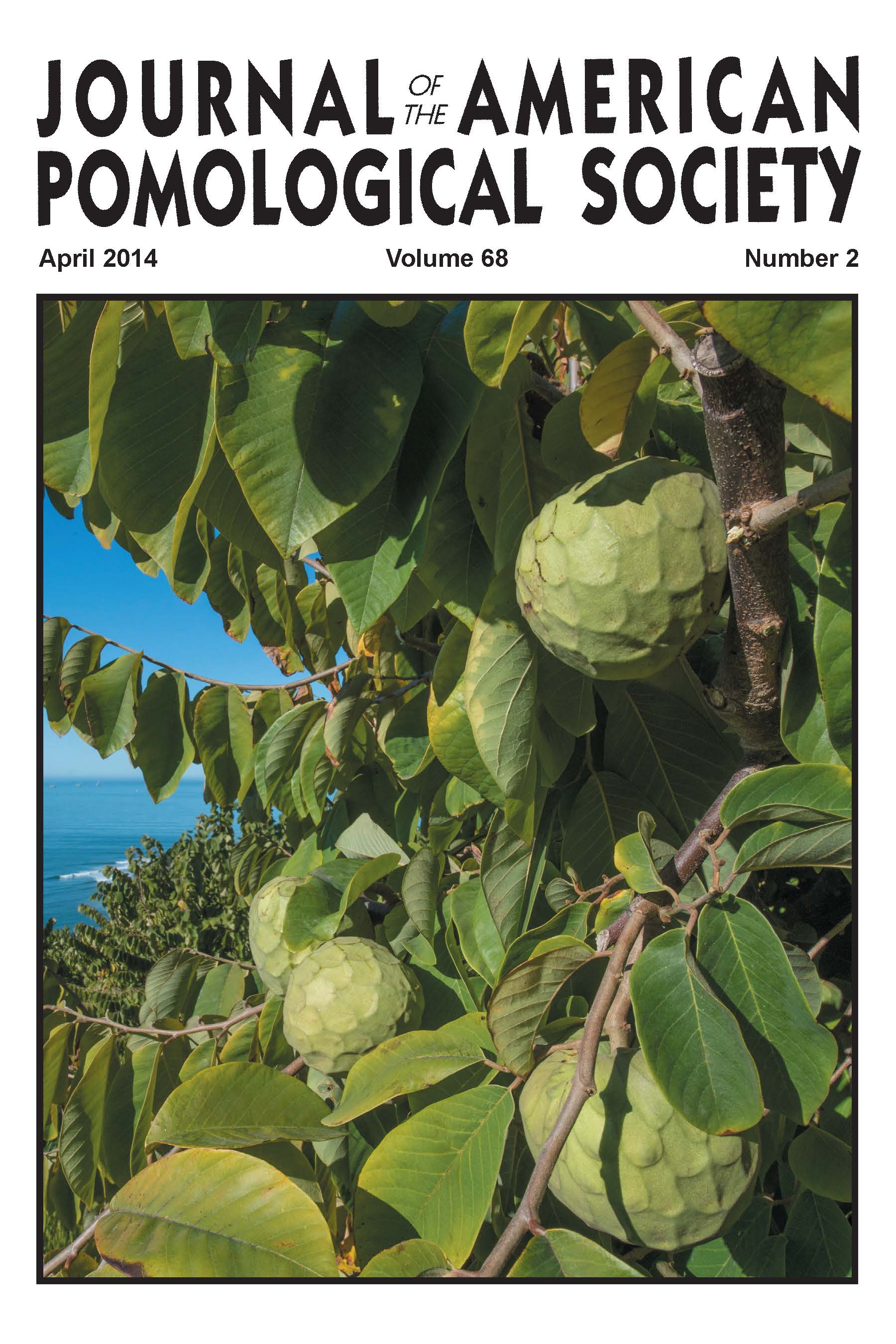
The North American Pawpaw [Asimina triloba(L.) Dunal] is a tree fruit that is native to the eastern United States, and commercial demand for the fruit is increasing. Pawpaw fruit have a short harvest season, bruise easily, and have a short shelf life, presenting challenges to storing, shipping, and marketing the fruit. Storing the pulp as a frozen processed product would eliminate the postharvest issues that impede fresh fruit sales, and make pawpaw fruit products available year-round. In 2010 and 2011, a series of experiments were conducted with the objectives to determine if a commonly available sauce maker could be effective for processing pawpaw pulp, and to compare processing efficiency of four commercially available pawpaw cultivars. Fruit weights, percent seed, and pulp extraction recovery from ripe fruit of four commonly available pawpaw cultivars ('Mitchell', 'PA-Golden', 'Sunflower', and 'Susquehanna') were examined. These cultivars were selected based on varietal fruit size, and texture differences. 'Sunflower' and 'Susquehanna' had larger fruit, fewer seeds, and a higher percentage of fresh weight recovered as processed pulp, compared to the smaller fruited 'Mitchell'. An average of 50% of fruit fresh weight was recovered as processed pulp using hand-processing, and an average of 45% of fruit fresh weight was recovered as processed pulp using the mechanized method with superior cultivars.
Downloads
Published
License

This work is licensed under a Creative Commons Attribution-NonCommercial 4.0 International License.
The American Pomological Society and Editors cannot be held responsible for the views and opinions expressed by individual authors of articles published herein. This also applies to any supplemental materials residing on this website that are linked to these articles. The publication of advertisements does not constitute any endorsement of products by the American Pomological Society or Editors.