
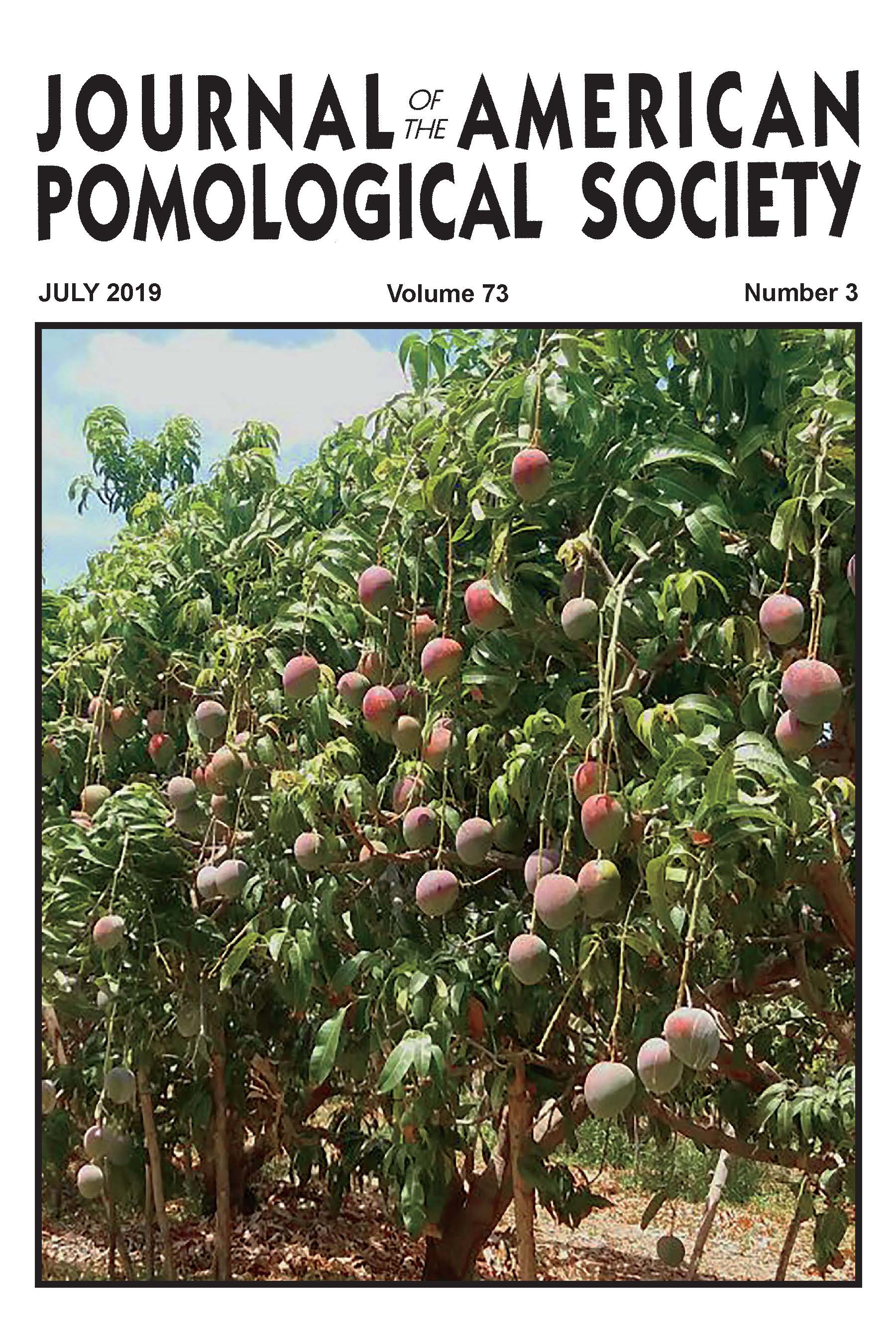
Biostimulants on Fruit Yield and Quality of Mango cv. Kent Grown in Semiarid
DOI:
https://doi.org/10.71318/apom.2019.73.3.152Keywords:
Mangifera indiciaL., post-harvest, production systemAbstract
Mango ( Mangiferaindica L.) is the second most exported fruit of Brazil, which is especially grown in São Francisco Valley, a semi-arid region. One of the main cultivars exported is ‘Kent’ which has favorable physicalchemical characteristics, but irregular production and low fruit retention on the tree. Thus, the objective of the present study was to evaluate yield and postharvest quality of ‘Kent’ fruits as a function of foliar spray with biostimulants. The experiment followed a randomized complete block design with five treatments, four replications per treatment and four plants per replication evaluated in two consecutive years (2016 and 2017). The treatments consisted of foliar sprays with plant biostimulants, as follows: T1) Control (without biostimulants); T2) Biostimulant containing nutrients and L-α-amino acids; T3) Biostimulant containing nutrients and Lithothamniumalgae extract; T4) Biostimulant containing nutrients and sucrose; and T5) Biostimulant containing nutrients, free amino acids and Lithothamniumalgae extract. Biostimulants affected fruit yield and quality of ‘Kent’ fruits in distinct ways between seasons. The biostimulant T2 and T5, promoted the highest fruit yields, and maintained the postharvest quality of the fruits required by the European market.
Downloads
Published
License

This work is licensed under a Creative Commons Attribution-NonCommercial 4.0 International License.
The American Pomological Society and Editors cannot be held responsible for the views and opinions expressed by individual authors of articles published herein. This also applies to any supplemental materials residing on this website that are linked to these articles. The publication of advertisements does not constitute any endorsement of products by the American Pomological Society or Editors.