Nut Quality Characteristics and Mineral Content of Chestnut Germplasm from Diverse Sources
DOI:
https://doi.org/10.71318/apom.2021.75.4.237Keywords:
Castanea sp., kernel color, nut weight, PCA, phenolic content, shell thicknessAbstract
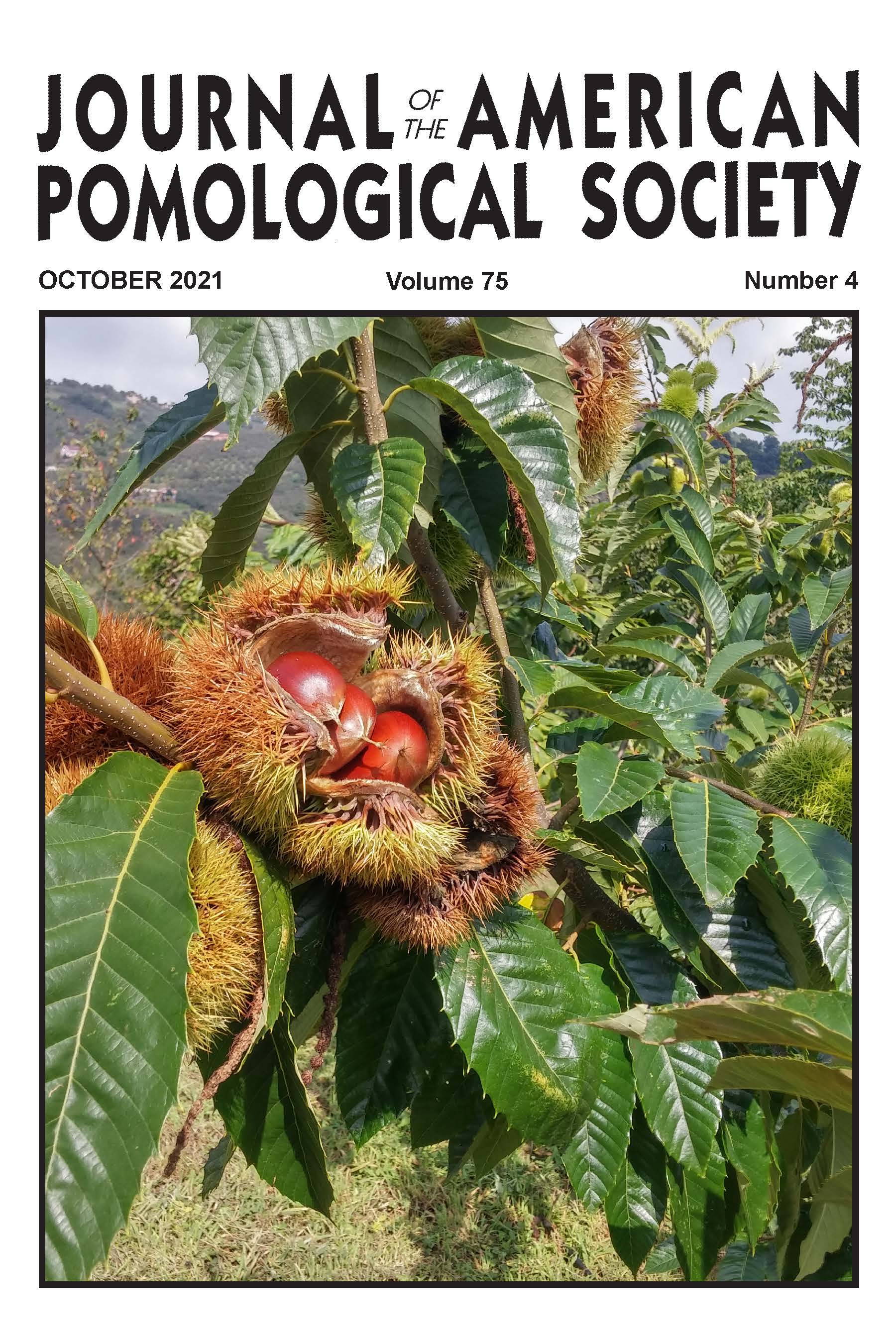
Chestnut is among the important fruit species in human health and nutrition due to its rich biochemical content. This study determined the nut characteristics and mineral contents of chestnut genotype/cultivars grown in the same ecological conditions (same plot, same soil, same cultural practices, etc.). Correlation between chestnut genotypes/cultivars and physicochemical characteristics was determined by Principal Component Analysis (PCA) analysis. The first two principal components explained 50.1% of the variation. The highest Coefficient of Variation (CV) was for nut weight (45.05%), total phenol (46.13%), kernel color (a; -56.85%) and magnesium (60.01%). ‘Bouche de Betizac’, J9 genotype, A41 genotype and ‘Akyüz’ had the highest nut weight, highest total phenol, thinnest shell, and highest nitrogen (N), respectively. In this study, chestnut genotypes and cultivars had rich biochemical compounds, especially when the genotypes were compared with the cultivars. The J9 in terms of total phenol, J6 in terms of calcium, A41 in terms of thin shell, and A30 in terms of phosphorus and magnesium are promising.
Downloads
Published
License

This work is licensed under a Creative Commons Attribution-NonCommercial 4.0 International License.
The American Pomological Society and Editors cannot be held responsible for the views and opinions expressed by individual authors of articles published herein. This also applies to any supplemental materials residing on this website that are linked to these articles. The publication of advertisements does not constitute any endorsement of products by the American Pomological Society or Editors.