
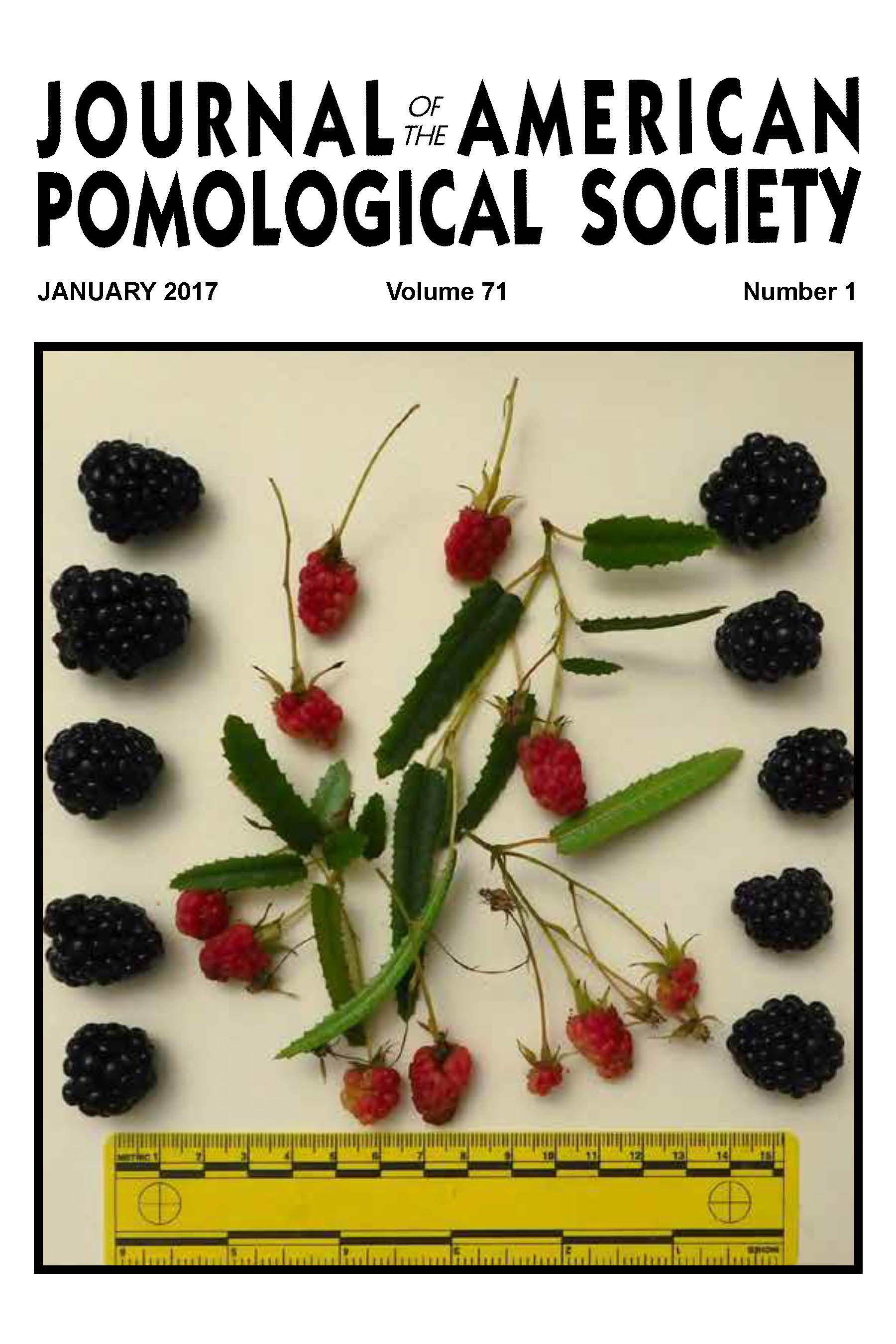
Small Genomes in Tetraploid RubusL. (Rosaceae) from New Zealand and Southern South America
DOI:
https://doi.org/10.71318/apom.2017.71.1.2Keywords:
Cvalue, flow cytometry, genome, ploidy, Rubus, germplasmAbstract
The genus Rubuscontains crop wild relatives of raspberries and blackberries. Rubussubgenera Micranthobatusand Comaropsisare endemic to the Southern Hemisphere in trans-Pacific Ocean environments of Australasia, South America, and the Falkland Islands. The United States Department of Agriculture, National Clonal Germplasm Repository (NCGR) houses a Rubusgenebank of living plants, including representatives of subgenera Micranthobatusand Comaropsis.Previously, accessions were determined by chromosome counts to be tetraploid. Our objective was to examine the nuclear DNA content (C values) of the tetraploid R. cissoides, R. parvus, R. schmidelioides, R. squarrosus,and R. geoidesin contrast with those of diploid and tetraploid black raspberries (R. occidentalis)and diploid red raspberry (R. idaeussubsp. idaeus).Nuclear DNA content was determined using flow cytometry. Surprisingly, the Cvalues of these species were significantly smaller than an autotetraploid clone of R. occidentalisor other tetraploid genotypes, and numerically equivalent to about the size of triploid raspberries. The small genomes may provide clues concerning the evolution of these subgenera.
Downloads
Published
License

This work is licensed under a Creative Commons Attribution-NonCommercial 4.0 International License.
The American Pomological Society and Editors cannot be held responsible for the views and opinions expressed by individual authors of articles published herein. This also applies to any supplemental materials residing on this website that are linked to these articles. The publication of advertisements does not constitute any endorsement of products by the American Pomological Society or Editors.