Walter Tennyson Swingle: A Relentless Intellect that Transformed American Pomology
DOI:
https://doi.org/10.71318/apom.2019.73.2.129Keywords:
Citrus breeding, citrus taxonomy, dates, historic, plant explorer, University of Miami, USDAAbstract
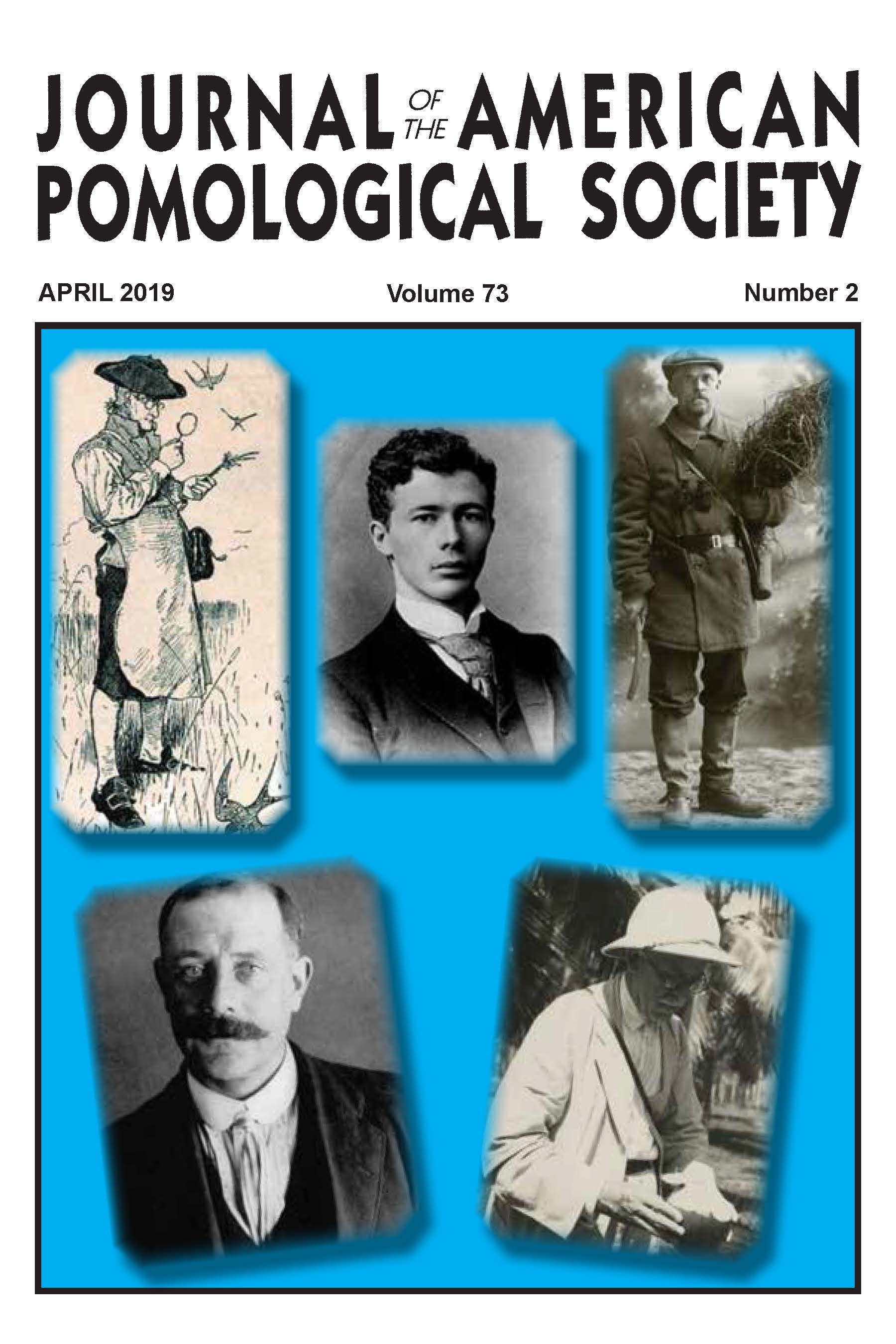
Walter Tennyson Swingle grew up outside of Manhattan, Kansas, attended classes at Kansas State Agricultural College (now KSU) at 15, and when he graduated at 20 he had already published 27 scientific papers in plant pathology, plant breeding and genetics. Swingle joined the United States Department of Agriculture (USDA) in 1891, and was sent to Florida to investigate diseases in orange trees. He established a USDA laboratory and began a comprehensive program to breed disease- and frost-resistant citrus. He proposed testing all known wild relatives for disease-resistance and other advantageous traits that could be introduced to improve citrus. While conducting comprehensive studies of the comparative anatomy and systematics of the orange subfamily, he discovered some new species and several new genera. His breeding originated several new categories of citrus: the tangelos, citranges and citrumelos (now critical as rootstocks), and many other intergeneric hybrids. He was an early advocate for permanent, living collections of economically important plants and their close relatives. In 1897-98, in collaboration with David Fairchild, he established the USDA’s Office of Foreign Seed and Plant Introduction, and new plant introduction research facilities were set up in Miami. He was a champion for ensuring that introduced plants were disease and pest free. He conducted plant exploration, mainly in countries surrounding the Mediterranean, and among many other accessions introduced date palms, figs, table grapes, and ‘Clementine’ mandarins. He also brought in the Blastophagawasp to pollinate Smyrna-type figs. After his retirement from the USDA, Swingle moved to Miami in 1943 and completed his treatise on the taxonomy of the citrus subfamily. “Even in his retirement, Swingle inspired a generation of students with his knowledge, curiosity of nature, and insights into plants. His simple advice to students was ‘Look and look, again and again,’ words still relevant today”.
Downloads
Published
License

This work is licensed under a Creative Commons Attribution-NonCommercial 4.0 International License.
The American Pomological Society and Editors cannot be held responsible for the views and opinions expressed by individual authors of articles published herein. This also applies to any supplemental materials residing on this website that are linked to these articles. The publication of advertisements does not constitute any endorsement of products by the American Pomological Society or Editors.